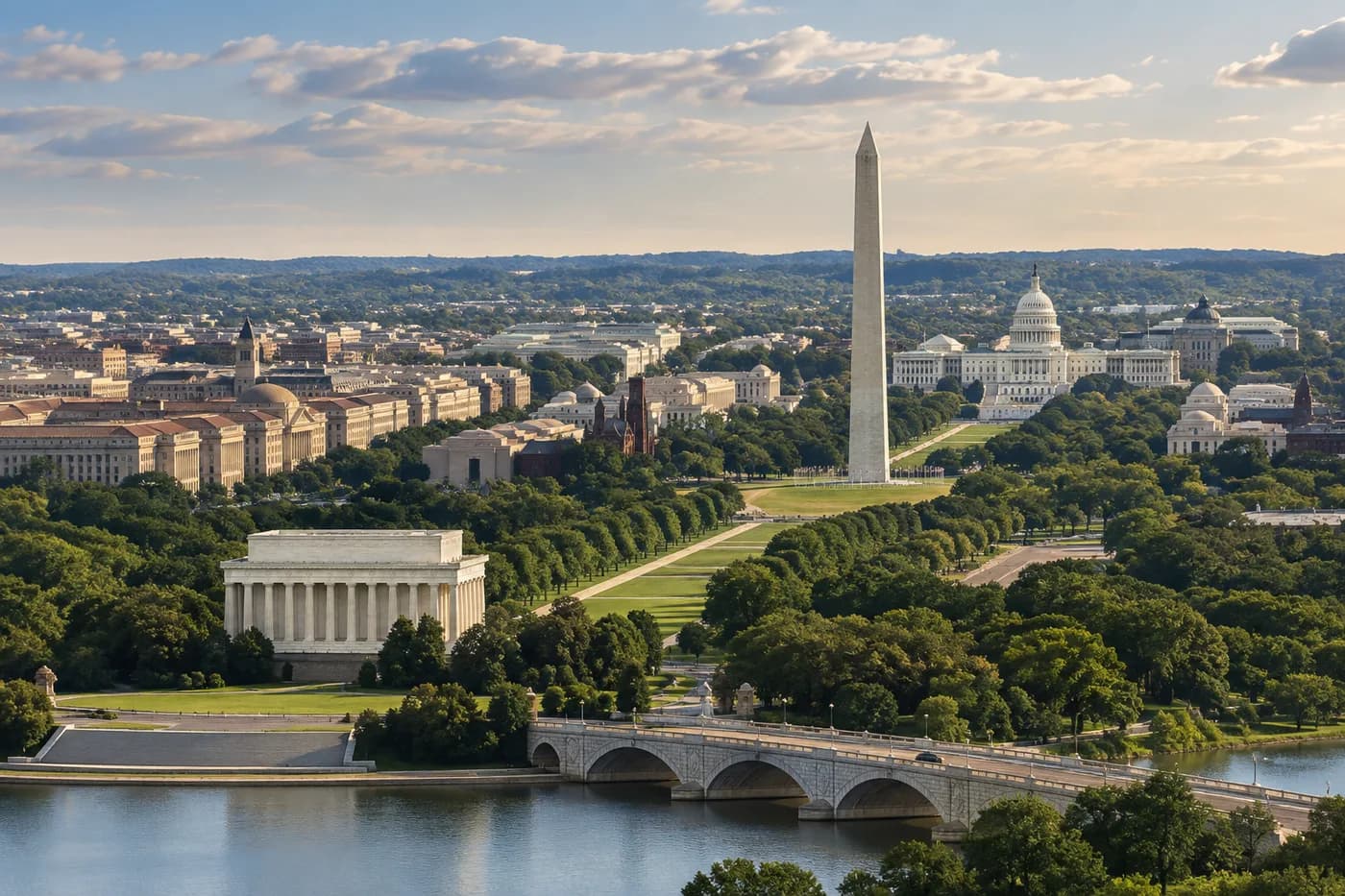
Around District of Columbia
Conditions vary across the state. Choose your city below, then describe what’s happening around your home or business.
Local wildlife information
Learn what to look for around your property, explore your city, and ask about an inspection or a quote.
Conditions vary across the state. Choose your city below, then describe what’s happening around your home or business.
Where you see wildlife, how long it has been going on, and anything you’ve already tried are the most useful details to mention.
Ask about an inspection, what treatment would involve, and whether follow-up visits are included. You don’t need to identify the problem yourself before getting in touch.
Before you compare quotes, it helps to know which wildlife actually live in District of Columbia, when they are busiest, and what the state figures look like. Everything below links to the agency or university page it came from.
Applicants must be 18, complete a Department-approved training class, pass an exam and pay a fee; the licence renews every two years and is not transferable.
DC Department of Energy and EnvironmentMore often if weather requires. Non-target wildlife must be released immediately at the capture site.
DC Department of Energy and EnvironmentEvery reasonable effort must be made to preserve family units using humane eviction, displacement and reunion strategies.
DC Department of Energy and EnvironmentThe Act’s family-unit and dependent-young provisions effectively suspend exclusion work in spring until young can leave on their own.
Companies providing wildlife control must also register with DOEE, and operators may only use methods DOEE prescribes.
Sources: DC Department of Energy and Environment; Rabies in the United States: Protecting Public Health; Impacted Bats. Figures are quoted as the source prints them. How we check our sources